Your design portfolio is your absolute most important career asset. In 2026, design agencies are no longer looking for a disorganized folders of pretty images or random social media banners. Recruiters want to see structured visual problem-solving, systematic brand identity layouts, and a clear creative process. Let's look at how to build a portfolio that stands out in Delhi NCR's competitive creative market.
Why Portfolio Structure Matters
A portfolio is far more than a showcase of artistic talent; it is a demonstration of how your mind works under commercial constraints. Creative directors at design agencies are not just looking at your ability to draw or use software tools like Adobe Photoshop and Illustrator. They want to see how you handle visual hierarchy, typography grid structures, color psychology, and branding guidelines across different media formats.
A portfolio built on a chaotic array of unrelated class exercises shows a lack of focus. Instead, modern industry standards require you to group your work into 3 to 4 comprehensive, detailed case studies. Each case study should take the viewer on a journey from a raw client problem to a polished, professional design solution. This structured storytelling is what separates junior generalists from high-paying professional visualizers.
Step-by-Step Portfolio Case Study Structure
When putting together your graphic design portfolio, format each project as a mini-case study following this logical layout:
1. The Client Brief and Objective
Start with a brief introduction. State who the client is, what their industry is, who their target audience is, and the specific challenge they faced. For example: "Designing a clean, sustainable packaging system for an organic coffee roaster in Gurgaon aiming to target young urban professionals." This shows that you understand design is built for business goals, not just personal expression.
2. Research, Moodboards, and Visual Strategy
Recruiters love to see the work that happens before the digital canvas is opened. Share your research. Show a moodboard of color inspiration, logo directions, and font pairings. Explain why you chose your specific visual tokens. If you are designing for a organic brand, explain how the earthy color palette (forest green, warm beige) and choice of serif font convey trust, heritage, and sustainability.
3. Sketches and System Iterations
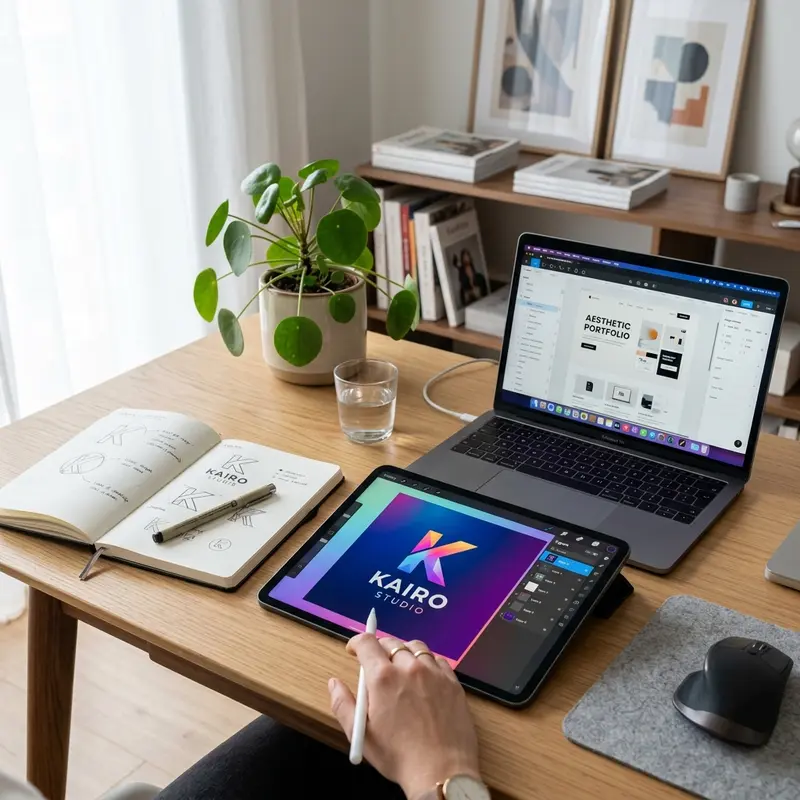
Show your early pencil sketches, wireframes, or digital vector drafts. This is the "messy middle" that demonstrates your ability to generate ideas. It proves to a creative director that you can explore multiple creative directions and refine them systematically, rather than just copying the first tutorial you find on YouTube.
4. Polished Final Mockups and Contextual Applications
Finally, display your designs in high-quality, realistic environments. Don't just show a flat logo file on a white background. Place the logo on physical packaging, show the branding system printed on stationery, display the promotional billboard mocked up on a real Delhi street, or showcase the brand's mobile responsive landing page. This proves that your design system actually works in the real world.
A Critical Portfolio Rule: Avoid using generic templates, stock vectors, or AI-generated clip art in your portfolio projects. Creative directors review hundreds of portfolios and can spot standard stock layouts instantly. Focus on showing custom, original vector paths, custom layouts, and clean typographic grids.
Selecting the Right Platform to Host Your Work
Where you host your design portfolio depends on your specific design specialization:
- Behance (Recommended for generalists and brand designers): Behance is the largest creative community in the world. It is completely free, has a massive audience, and allows you to build long, vertically scrolling case studies with high-resolution images, video embeds, and text descriptions. It is the go-to platform for branding, illustration, and print packaging designers.
- Dribbble (Best for UI, digital, and micro-interaction designers): Dribbble focuses on short, visual "shots" of design interfaces. It is great for catching quick eyes and showing off sleek mobile app UI designs, but lacks the space for detailed case studies. Dribbble is best used as a teaser platform that links to a more detailed case study site.
- Custom Portfolio Website (Best for senior designers and UI/UX specialists): Building a custom, clean portfolio website (using platforms like Webflow, Framer, or custom HTML/CSS) shows that you can design responsive digital layouts. It allows you to control the entire user experience and is highly valued by tech companies and startup agencies.
Delhi NCR Design Agency Realities and Job Scopes
Delhi NCR has a huge marketing, startup, and advertising industry. Gurgaon is home to major multinational agencies (like Ogilvy, Leo Burnett, and Dentsu) and massive corporate marketing teams. Noida is a booming hub for tech startups, e-commerce brands, and digital marketing agencies. This creates a huge demand for skilled visual designers.
Agencies look for designers who specialize in particular domains, which is why your portfolio must be tailored:
As you progress to a Senior Visualizer or Art Director role in Delhi NCR, salaries can scale to ₹75,000 to ₹1,80,000+ per month. To secure these senior positions, your portfolio must show that you can lead visual campaigns and manage design teams, rather than just editing images.
Summary: Building a Winning Portfolio
To land your dream design job in 2026, keep your portfolio clean, selective, and process-oriented. Always double-check your typography spacing, avoid generic placeholders, and ensure your site loads fast on mobile screens.
At MAAC Delhi NCR, our graphic design and UI/UX programs are built around real-world projects. We guide students from the fundamentals of layout grids to the final presentation of their digital portfolios on Behance. This ensures that when you complete your course at our Ghaziabad or Noida Extension centres, your portfolio has the technical and visual quality to immediately land job interviews with top agencies.
Launch Your Career in Graphic Design
Master visual hierarchies, typography rules, branding, and digital layouts. View details for our Graphic Design Course or consult our advisors.